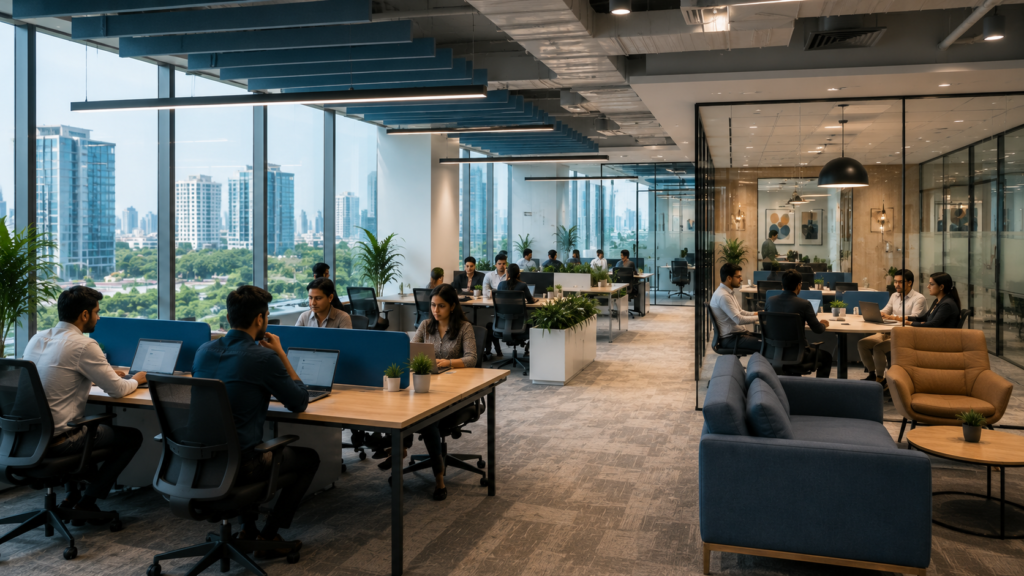
Benefits of Flexible Office Spaces for Entrepreneurs
Entrepreneurs today need more than just a desk and a chair. They need a professional workplace that can adapt to changing team sizes, business goals, budgets, and working styles. This is why flexible office spaces are becoming an increasingly attractive option for startups, freelancers, consultants, SMEs, and growing businesses.
Unlike traditional offices that often require long leases, large investments, and extensive setup, flexible workspaces provide businesses with ready-to-use infrastructure and greater freedom. Entrepreneurs can access professional workspaces without taking on the responsibilities of setting up and managing an entire office.
What Are Flexible Office Spaces?
Flexible office spaces are professionally managed workplaces that allow businesses to choose workspace solutions according to their requirements. Depending on the provider, options can include private offices, dedicated workstations, shared workspaces, meeting rooms, and managed office solutions.
These workspaces can provide essential facilities such as:
- Fully furnished workstations
- High-speed internet
- Meeting and conference rooms
- Reception services
- Housekeeping
- Security
- Power backup
- Pantry facilities
- Office maintenance
- Visitor management
This makes flexible offices particularly useful for entrepreneurs who want to focus on their business rather than office administration.
1. Lower Initial Investment
Starting a business often requires significant investment in technology, employees, marketing, inventory, and customer acquisition. Spending a large amount on office interiors and infrastructure can put unnecessary pressure on cash flow.
Flexible office spaces reduce the need for major upfront investment in furniture, interiors, networking, reception areas, and other facilities.
Entrepreneurs can therefore allocate more capital towards activities that directly support business growth.
2. Greater Flexibility
Business requirements can change quickly.
An entrepreneur may start with a small team and later require additional workstations, private cabins, or meeting facilities. Flexible office solutions make it easier to adjust workspace requirements as the business develops.
This flexibility is especially valuable for startups and growing companies.
3. Faster Office Setup
Setting up a traditional office can take weeks or even months because it may involve finding a property, designing interiors, purchasing furniture, installing internet, arranging security, and hiring support staff.
A flexible office is generally ready for business operations, allowing entrepreneurs to start working much faster.
This can be particularly beneficial when launching a new business, opening a branch, or entering a new market.
4. Professional Business Environment
A professional office can strengthen a company’s image among clients, investors, employees, and business partners.
Modern flexible workspaces can provide professionally designed reception areas, meeting rooms, private offices, and collaborative spaces.
For entrepreneurs, this means they can create a strong corporate impression without investing heavily in their own office infrastructure.
5. Better Cost Control
Traditional office ownership or leasing can involve several expenses beyond rent, including:
- Electricity
- Internet
- Maintenance
- Housekeeping
- Security
- Furniture
- Repairs
- Office equipment
Flexible workspace providers often combine several of these services into a single workspace solution.
This can make monthly budgeting easier and provide entrepreneurs with greater visibility over their operating expenses.
6. Access to Meeting and Conference Facilities
Entrepreneurs regularly meet clients, investors, employees, and potential business partners.
A flexible office can provide access to professionally equipped meeting and conference rooms without requiring businesses to dedicate valuable office space to permanent meeting facilities.
This is useful for:
- Client presentations
- Investor meetings
- Interviews
- Team meetings
- Training sessions
- Business discussions
7. Easy Business Expansion
Growth is one of the biggest challenges for a successful startup.
When a team expands, a traditional office may require renovation, relocation, or a new lease. Flexible office spaces can offer a simpler way to increase workspace according to changing business requirements.
This scalability allows entrepreneurs to plan their workspace around their business instead of adjusting their business around a fixed office.
8. Reduced Office Management Responsibilities
Managing an office takes time and attention.
Housekeeping, maintenance, security, internet connectivity, utilities, and visitor management can become daily administrative responsibilities.
With a professionally managed flexible office, many of these activities can be handled by the workspace provider.
Entrepreneurs can therefore spend more time on:
- Business development
- Sales
- Marketing
- Product development
- Customer relationships
- Team management
9. Better Networking Opportunities
Flexible workspaces often bring professionals and businesses from different industries together.
This environment can create opportunities to build valuable professional connections, exchange ideas, discover partnerships, and develop new business relationships.
For entrepreneurs, networking can be an important source of knowledge, referrals, collaborations, and growth opportunities.
10. Improved Employee Experience
The workplace can influence employee satisfaction and productivity.
Modern flexible offices can offer comfortable workstations, professional interiors, collaborative areas, meeting facilities, natural lighting, and well-maintained common spaces.
A better workplace experience can help businesses create an environment where employees can work comfortably and collaborate effectively.
Flexible Office vs Traditional Office
| Feature | Flexible Office | Traditional Office |
|---|---|---|
| Initial Investment | Lower | Higher |
| Setup Time | Faster | Longer |
| Furniture | Usually available | Separate investment |
| Internet | Usually available | Separate setup |
| Maintenance | Professionally managed | Business responsibility |
| Housekeeping | Usually managed | Separate arrangement |
| Meeting Rooms | Available | Dedicated space required |
| Scalability | High | More difficult |
| Flexibility | High | Relatively low |
Who Can Benefit from Flexible Office Spaces?
Flexible office solutions can be useful for:
- Entrepreneurs
- Startups
- Freelancers
- Consultants
- IT companies
- Digital agencies
- SMEs
- Remote teams
- Growing businesses
- Companies entering new markets
They are particularly valuable for businesses that want a professional workplace without committing significant capital to traditional office setup.
How to Choose the Right Flexible Office Space
Before selecting a workspace, entrepreneurs should consider:
Location: Choose a convenient location for employees and clients.
Connectivity: Check road, metro, and public transport accessibility.
Workspace Options: Make sure the provider offers the right combination of private offices, workstations, and meeting rooms.
Internet & Technology: Reliable connectivity is essential for modern businesses.
Security: Check CCTV, access control, visitor management, and other security measures.
Scalability: Ensure that additional workspace can be arranged as your team grows.
Facility Management: Understand which services such as housekeeping, maintenance, reception, and utilities are included.
Pricing: Compare the complete cost rather than looking only at the basic workspace rent.
Why Flexible Workspaces Are a Smart Choice for Entrepreneurs
Entrepreneurship requires agility. Businesses need to respond quickly to new opportunities, changing customer requirements, team expansion, and market conditions.
A flexible office allows entrepreneurs to maintain that agility while providing access to professional infrastructure.
Instead of spending valuable time and capital managing an office, entrepreneurs can focus on building their brand, serving customers, developing products, and growing revenue.
Conclusion
Flexible office spaces offer entrepreneurs a practical combination of professional infrastructure, lower initial investment, flexibility, scalability, and reduced administrative responsibilities.
For startups and growing businesses, the ability to move quickly and adjust workspace requirements can be a significant advantage. Whether you need a private office, dedicated workspace, meeting room, or a larger managed office solution, flexible workspaces can provide an environment designed around your business needs.
As businesses continue to adopt more flexible ways of working, professionally managed office spaces are becoming an important part of the modern business ecosystem in India.