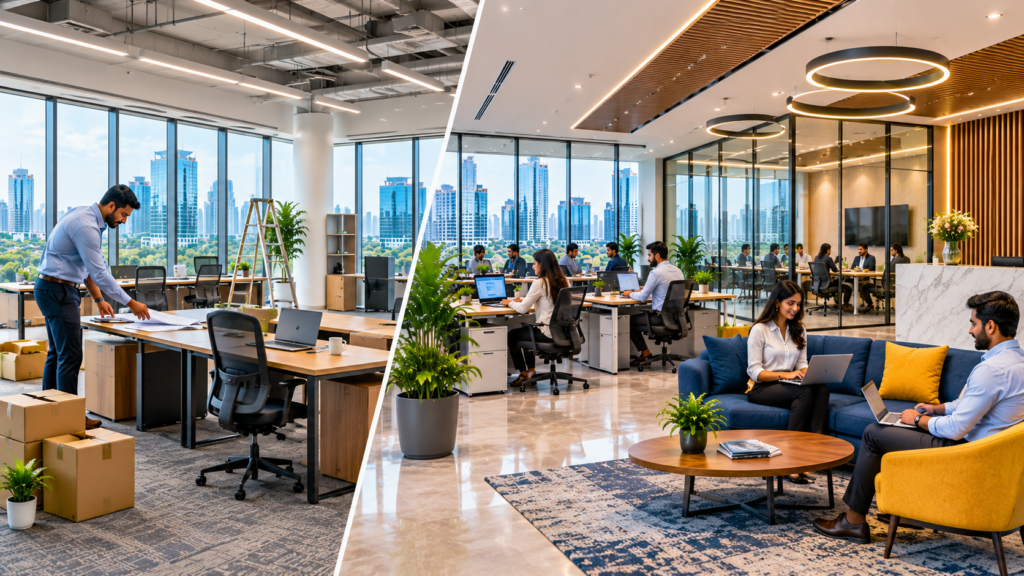
Why Businesses Are Choosing Managed Offices Over Traditional Offices
The way businesses operate is changing. Startups, SMEs and established companies are increasingly looking for office solutions that offer convenience, flexibility and professional infrastructure without the complexity of managing every workplace requirement independently.
Traditional office spaces have been a common choice for businesses for many years. However, setting up and maintaining a conventional office can involve several responsibilities, including arranging furniture, internet connectivity, maintenance, housekeeping, security and other essential facilities.
This is one reason why more businesses are considering managed offices as an alternative. Managed offices provide a professionally maintained workspace with selected facilities and operational support, allowing companies to focus more on their core activities.
Let’s understand why businesses are choosing managed offices over traditional offices and how this workspace model can support modern business requirements.
What Is a Managed Office?
A managed office is a dedicated workspace where the provider takes responsibility for selected office infrastructure and operational services. Depending on the agreement, businesses may receive furnished workstations, private cabins, internet connectivity, meeting rooms, housekeeping, reception support and maintenance services.
Unlike a conventional office where the company may need to coordinate multiple setup and maintenance activities, a managed office offers a more organised workspace arrangement.
The exact facilities, services and customisation options depend on the provider and selected plan.
Why Businesses Are Choosing Managed Offices
1. Reduced Office Setup Responsibilities
Setting up a traditional office requires planning and coordination. Businesses may need to arrange furniture, internet connections, electrical infrastructure, workstations, meeting rooms and other facilities before employees can start working.
Managed offices generally offer ready-to-use infrastructure, reducing the effort involved in setting up a workplace. This can help businesses establish their office operations more efficiently.
2. Better Cost Planning
A traditional office may involve several separate expenses, including rent, furniture, equipment, internet, maintenance, housekeeping and utilities.
Managed office arrangements can combine selected facilities and services under one agreement. This may make workplace expenses easier to plan and manage.
However, businesses should compare the complete cost, including deposits, taxes, utilities, parking and additional service charges, before choosing a workspace.
3. Professional Office Infrastructure
A professional working environment plays an important role in employee productivity and client experience.
Managed offices may provide:
- Furnished workstations
- Ergonomic office furniture
- High-speed internet
- Meeting and conference rooms
- Air conditioning
- Reception facilities
- Power backup
- Pantry and common areas
- Security and access management
The availability of these facilities depends on the workspace provider and selected plan.
4. Greater Flexibility for Growing Businesses
Business requirements can change as companies hire new employees, expand departments or introduce new projects.
Managed office providers may offer different workspace arrangements, including dedicated desks, private cabins and larger office spaces. This can help businesses choose a suitable setup according to their current team size and operational requirements.
Expansion depends on available space, pricing and contract conditions, so companies should discuss future requirements before signing an agreement.
5. Less Day-to-Day Facility Management
Managing an office involves more than paying rent. Businesses may need to coordinate housekeeping, maintenance, internet support, electrical issues and other workplace services.
In a managed office, selected operational responsibilities are handled or supported by the provider. This can reduce the administrative effort required from the company’s internal team.
As a result, business owners and managers may have more time to concentrate on employees, customers and business development.
6. Professional Environment for Employees and Clients
The office environment can influence how employees work and how visitors perceive a business.
Managed offices generally offer organised workstations, professional reception areas, meeting rooms and maintained common facilities. These features can help create a suitable environment for daily operations, client interactions and internal meetings.
7. Access to Meeting and Collaboration Facilities
Businesses frequently need dedicated spaces for interviews, client presentations, team discussions and project reviews.
Managed office arrangements may provide meeting rooms and conference facilities without requiring companies to create and maintain separate spaces independently.
The number of included hours, booking policies and additional charges should be checked with the provider.
8. Suitable for Different Business Sizes
Managed offices are not limited to large organisations. Startups, SMEs, consulting firms, IT companies and established businesses can explore managed workspace solutions according to their requirements.
A small team may choose a private cabin, while a larger organisation may require a dedicated office arrangement with additional workstations and meeting facilities.
Managed Office vs Traditional Office: Key Differences
| Comparison Factor | Traditional Office | Managed Office |
|---|---|---|
| Office Setup | Often requires independent arrangements | Generally ready-to-use |
| Furniture | Usually arranged separately | Generally provided |
| Internet | Separate setup may be required | Commonly available |
| Maintenance | Managed by the business in many cases | Often provider-supported |
| Meeting Rooms | Separate arrangement may be needed | May be included or bookable |
| Housekeeping | Independently arranged in many cases | May be provider-supported |
| Office Management | Managed by the business | Selected services managed by provider |
| Flexibility | Depends on lease terms | May offer flexible workspace plans |
| Setup Time | May take longer | Often faster |
| Customisation | Usually greater control | Depends on the agreement |
The comparison represents general arrangements. Actual services and responsibilities vary between buildings, providers and contracts.
Which Businesses Can Benefit from Managed Offices?
Managed offices can be useful for different types of businesses.
Startups: New businesses can access furnished workspaces without independently organising every office requirement.
IT and Technology Companies: Dedicated workstations, internet connectivity and meeting facilities can support technology teams.
Small and Medium-Sized Enterprises: SMEs can explore professional office infrastructure while reducing the need to coordinate multiple facility services.
Consulting and Professional Service Firms: Private cabins and meeting rooms can support client interactions and confidential discussions.
Recruitment and HR Companies: Interview spaces, workstations and reception facilities can support recruitment activities.
Growing Enterprises: Businesses expanding their teams may explore managed office arrangements that match their capacity and operational needs.
Why Gurgaon Is a Practical Location to Explore Managed Offices
Gurgaon, also known as Gurugram, has a diverse commercial office market with business parks, corporate developments and flexible workspace providers.
Areas such as Cyber City, Udyog Vihar, Golf Course Road, Golf Course Extension Road and Sohna Road are among the locations businesses may consider when evaluating office requirements.
Sohna Road is worth exploring for startups, SMEs and companies looking for commercial office environments with access to nearby residential and business developments.
When selecting a managed office in Gurgaon, businesses should consider:
- Connectivity and employee commute
- Building infrastructure and maintenance
- Availability of parking
- Internet and power backup
- Meeting rooms and private cabins
- Total monthly occupancy cost
- Contract duration and expansion options
Choosing the right location can help create a convenient working environment for employees and visiting clients.
Why Consider UR Offices for Managed Workspace Solutions?
UR Offices & Real Estate Pvt. Ltd. offers flexible workspace solutions for startups, freelancers, SMEs and established businesses in Gurugram.
Located at Spaze IT Tech Park, Sector 49, Sohna Road, UR Offices provides different workspace options to meet varying professional requirements.
Depending on availability and the selected plan, businesses can explore:
- Managed Office: A dedicated office arrangement with selected provider-supported services.
- Private Cabin: An enclosed workspace for individuals or teams.
- Dedicated Desk: A designated workstation for regular use.
- Meeting Rooms: Professional spaces for client meetings, interviews and team discussions.
- Virtual Office: Selected business-address and administrative services.
- Day Pass: Workspace access for short-term or occasional requirements.
These solutions allow businesses to select a workspace according to their team size, working style and operational needs.
To explore available workspace solutions, visit UR Offices.
Contact UR Offices:
- Phone: +91 95990 68003
- Email: info@uroffices.in
- Address: Unit No. 442 & 443, 4th Floor, Tower B3, Spaze IT Tech Park, Sohna Road, Sector 49, Gurugram, Haryana – 122018.
Contact the team to enquire about current availability, facilities and workspace terms.
What to Check Before Choosing a Managed Office
Before selecting a managed office, businesses should evaluate the following points:
- Workspace Capacity: Check whether the office can accommodate your current team and expected growth.
- Facilities: Confirm the availability of internet, furniture, meeting rooms, power backup and other essential amenities.
- Privacy: Evaluate private cabins, access control and suitability for confidential business activities.
- Location: Consider employee commute, road connectivity and parking.
- Pricing: Review rent, deposit, maintenance, utilities, taxes and additional charges.
- Service Agreement: Understand which responsibilities are handled by the provider and which remain with your business.
- Contract Flexibility: Check the lock-in period, notice period, renewal terms and expansion options.
- Workspace Visit: Inspect the actual premises before making a final decision.
Frequently Asked Questions
1. Why are businesses choosing managed offices?
Businesses consider managed offices because they can provide furnished workspaces, selected facility services and a more convenient office setup. This may reduce the effort involved in independently managing office infrastructure.
2. Are managed offices more cost-effective than traditional offices?
They can be cost-effective in some situations, but the total cost depends on office size, location, facilities and contract terms. Businesses should compare all setup, occupancy and operating expenses before deciding.
3. Are managed offices suitable for startups?
Yes. Managed offices can suit startups that want a professional workspace with furnished infrastructure and selected operational support without independently arranging every office facility.
4. Do managed offices provide meeting rooms?
Many managed office providers offer meeting rooms, either as part of the selected plan or through separate booking arrangements. Availability and charges vary.
5. Can a managed office accommodate a growing team?
Some providers offer additional desks, private cabins or larger office arrangements. Expansion depends on available inventory and the terms of the agreement.
6. What is the difference between a managed office and a traditional office?
A traditional office often requires the business to arrange and manage furniture, internet, maintenance and other facilities independently. A managed office generally includes selected infrastructure and provider-supported services under an agreement.
7. Where can I find managed office space in Gurgaon?
Businesses can explore managed workspace options in commercial areas such as Sohna Road, Cyber City, Udyog Vihar and Golf Course Extension Road. Compare the building, facilities, pricing and commute before selecting a location.
Conclusion
Businesses are increasingly considering managed offices because they offer an alternative to the responsibilities involved in setting up and operating a traditional office. Furnished infrastructure, selected facility support, meeting spaces and different workspace arrangements can make managed offices a practical choice for startups, SMEs and established companies.
However, the right workspace depends on business size, budget, privacy requirements and long-term plans. Before making a decision, compare the complete cost, services, contract terms and location.
If you are exploring a professional workspace in Gurugram, discover the managed office and flexible workspace solutions available at UR Offices.