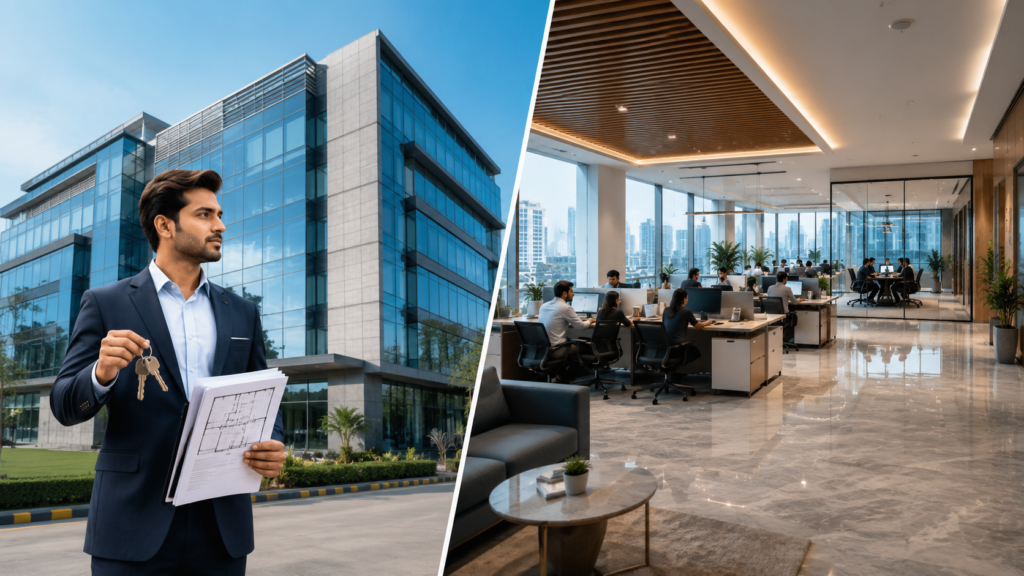
Office Space Buying vs Renting – Which is Better?
Choosing between buying and renting office space is one of the most important financial decisions a business can make. The right choice affects your cash flow, operational flexibility, employee experience, and long-term growth.
In 2026, many startups, SMEs, and even large enterprises are shifting towards managed and rented office spaces because they offer flexibility and lower upfront costs. However, purchasing office space can also be a smart long-term investment for businesses with stable growth plans.
This guide compares both options to help you make an informed decision.
Understanding Office Space Buying
Buying office space means purchasing a commercial property that becomes a long-term business asset.
Advantages of Buying Office Space
1. Long-Term Investment
Commercial properties often appreciate over time, making office ownership a valuable asset.
2. No Monthly Rent
Instead of paying rent, your monthly expense may be limited to loan EMIs, maintenance, and operating costs.
3. Complete Control
Owners have full freedom to renovate, expand, or customize their workspace.
4. Business Stability
Owning an office eliminates concerns about lease renewals or rent increases.
5. Asset Creation
The office becomes part of your company’s balance sheet and can support future financing.
Challenges of Buying Office Space
- High initial investment
- Down payment requirements
- Loan obligations
- Property taxes
- Maintenance responsibilities
- Lower flexibility for expansion
- Slower business relocation
Buying is generally better suited to businesses with predictable, long-term space requirements and sufficient capital.
Understanding Office Space Renting
Renting office space allows businesses to operate without purchasing commercial property.
Many companies now choose:
- Managed Offices
- Serviced Offices
- Plug-and-Play Offices
- Flexible Workspaces
- Enterprise Office Solutions
Benefits of Renting Office Space
Lower Initial Investment
Businesses avoid spending large amounts on property purchases, interiors, furniture, and infrastructure.
Faster Setup
Most managed offices are fully operational and ready for immediate occupancy.
Business Flexibility
Companies can easily expand or reduce office space based on changing team sizes.
Predictable Monthly Costs
Rent generally includes:
- Furniture
- Internet
- Housekeeping
- Security
- Reception
- Maintenance
- Utility Management
This simplifies budgeting.
Better Cash Flow
Instead of locking capital into real estate, businesses can invest in:
- Marketing
- Technology
- Hiring
- Product Development
- Business Expansion
Office Buying vs Renting Comparison
| Feature | Buying Office Space | Renting Office Space |
| Initial Investment | Very High | Low |
| Monthly Expense | EMI + Maintenance | Fixed Monthly Rent |
| Office Setup | Requires Interior Setup | Ready-to-Move |
| Furniture | Additional Investment | Usually Included |
| Maintenance | Owner Responsibility | Included |
| Business Flexibility | Limited | Excellent |
| Relocation | Difficult | Easy |
| Cash Flow | Capital Locked | Better Liquidity |
| Scalability | Limited | Easy Expansion |
| Best For | Large Established Companies | Startups, SMEs & Growing Businesses |
When Should You Buy Office Space?
Buying makes sense when:
- Your business has stable long-term growth.
- You have sufficient capital or financing.
- You want to build long-term commercial assets.
- You don’t expect to relocate frequently.
- Office ownership aligns with your financial strategy.
When Should You Rent Office Space?
Renting is often the better option when:
- You’re launching a startup.
- Your team is growing rapidly.
- You need flexibility.
- You want lower operational costs.
- You prefer managed facilities.
- You plan to expand into multiple cities.
- You don’t want large upfront investments.
Managed Office Spaces: The Best of Both Worlds
Managed office spaces have become a preferred solution because they combine the convenience of renting with the professional experience of a premium corporate office.
Benefits include:
- Fully furnished workstations
- Private cabins
- Meeting rooms
- Reception services
- High-speed internet
- Facility management
- Housekeeping
- Security
- Power backup
- Business support services
Businesses can start operations almost immediately without worrying about infrastructure or day-to-day office management.
Factors to Consider Before Deciding
Before buying or renting office space, evaluate:
- Business size
- Growth plans
- Available capital
- Monthly cash flow
- Preferred location
- Employee accessibility
- Lease flexibility
- Maintenance responsibilities
- Future expansion needs
- Return on investment (ROI)
Which Option is Better in 2026?
For most startups, SMEs, IT firms, consulting companies, and growing businesses, renting a managed office space offers greater flexibility, lower financial risk, and faster operational readiness.
Buying office space remains a good option for businesses with long-term stability, sufficient capital, and a strategic interest in owning commercial real estate.
The right choice depends on your company’s financial goals, growth plans, and operational priorities.
Conclusion
There is no universal answer to whether buying or renting office space is better. Buying creates a long-term asset but requires substantial investment and ongoing management. Renting—especially through managed office solutions—provides flexibility, predictable costs, and professional infrastructure that allows businesses to focus on growth rather than facility management. Carefully assess your budget, future expansion plans, and operational requirements before making a decision.